 The Global Shift Network
The Global Shift Network
The Global Shift Network
By Global Shift Network Intelligence Team | February 2026
Everyone is buying Nvidia stock and talking about AGI timelines, but the physical reality of artificial intelligence is built on a massive, singular point of failure.
If you read the financial news today, you would think artificial intelligence exists purely in the cloud. We talk about algorithms, software, and infinite digital possibilities. We watch companies like Nvidia add billions of dollars to their valuation overnight, driven by the belief that AI will fundamentally reshape the global economy.
But the "cloud" is just someone else's computer. And artificial intelligence is not magic; it is physical. It requires vast amounts of raw materials, electricity, and most importantly, highly specialised hardware.
To train advanced AI models, you cannot use standard computer processors. You need tens of thousands of specialized Graphics Processing Units (GPUs) wired together in massive, energy-hungry data centres. Right now, Nvidia designs the best AI GPUs in the world. Their H100 and Blackwell chips are the undisputed gold standard, and tech giants are spending billions to hoard them.
But there is a catch that the stock market rarely focuses on: Nvidia does not actually make anything.
Nvidia is what the industry calls a "fabless" semiconductor company. They employ brilliant engineers to design the architecture of the chips, but they do not own the factories required to physically manufacture them. The process of turning a design into a physical silicon chip is the most complex manufacturing process in human history. It requires machines that cost hundreds of millions of dollars, operating in cleanrooms that are vastly purer than a hospital operating theatre.
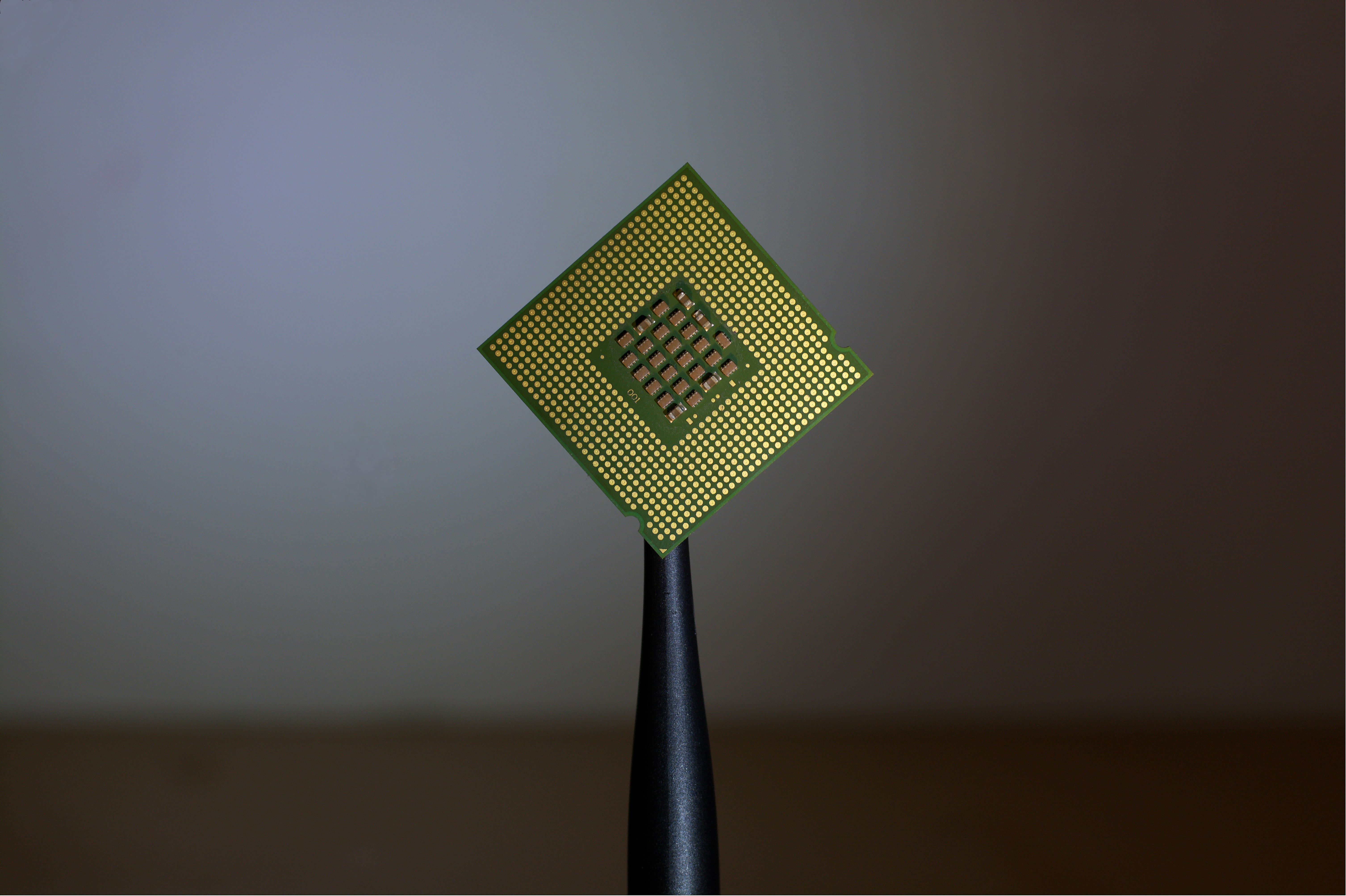
So, who actually prints the chips that power the AI revolution? The answer lies almost exclusively on the island of Taiwan.
The Taiwan Semiconductor Manufacturing Company (TSMC) is the undisputed king of silicon. For the highly advanced, sub-5-nanometer chips required for cutting-edge AI, TSMC manufactures over 90% of the global supply. They physically build the chips for Nvidia, Apple, AMD, and almost every other major tech player.
This creates a stunning bottleneck in the global economy. The entire artificial intelligence boom, the trillion-dollar valuations, and the future of technological dominance all funnel through a handful of highly vulnerable manufacturing plants located on the western coast of Taiwan.
This is where economics collides violently with geopolitics. The facilities producing the hardware for the AI revolution are situated on an island that the People's Republic of China claims as its own territory. Beijing has explicitly stated its intention to "reunify" with Taiwan, and refuses to rule out the use of military force to achieve it.
If a geopolitical crisis triggers a blockade of the Taiwan Strait, or a kinetic conflict disrupts the power grid on the island, the physical supply chain for AI hardware does not just slow down; it drops to zero.
You cannot simply move a semiconductor plant. Building a new, cutting-edge "fab" takes up to five years, tens of billions of dollars, and an army of highly specialised engineers. The United States and Europe are currently spending heavily to subsidise domestic chip manufacturing, but these efforts will take years to bear fruit, and TSMC's Taiwan facilities remain generations ahead of the competition.
Because the scaling of AI is entirely dependent on Taiwan's physical infrastructure, predicting AGI timelines cannot be viewed in a digital vacuum. That is why we built the AI Disruption Index.
Our telemetry models track the capital frenzy and shrinking AGI timelines, but cross-reference them directly against the physical compute bottlenecks in the Taiwan Strait. If the physical supply chain is at risk, digital disruption hits a wall.
→ View the Live AI Disruption IndexThe next time you see a headline about AI breaking new boundaries or tech stocks hitting record highs, remember the physical reality. The entire structure is balancing on the edge of the world's most dangerous geopolitical fault line.